
Start dropshipping without building a China-side supply chain alone.
Dropshipping lets you sell products online before committing to large inventory. When a customer orders, the product is prepared and shipped through the supply side. AIDrop Agent coordinates sourcing, quality checks, packing, inventory choices, and international delivery from China so you can test products and focus on selling.
COMPANY & WAREHOUSE
Meet the business behind AIDrop Agent.
AIDrop Agent is the service brand operated by Changsha Yuhua District Jinlintian Trading Firm (长沙市雨花区锦临添贸易商行), registered in Changsha, Hunan, China.
We coordinate sourcing, quality checks, packaging and fulfillment. Your store keeps control of the offer and final commercial approvals.
Yiwu warehouse
Building 50, Beixiazhu
Yiwu, Zhejiang, China
Start with one product or order question.
Share your product, destination and the work you need help with so we can clarify the scope.
Sell online. Source, pack, and ship each paid order from China.
You run the storefront and customer relationship. The product stays with the supplier or fulfillment operation until an order is paid, which can lower the inventory and fixed overhead required to test demand. The trade-off is that sourcing, quality, packing, and shipping still need an accountable owner.
You publish and sell
Choose the product, price, offer, and customer promise.
The customer pays your store
The order becomes the trigger for physical fulfillment.
China-side work begins
AIDrop coordinates the product, QC, packing, and release.
The parcel reaches the customer
Shipping, tracking, and exceptions return to the store.
Scaling ads is easier than scaling an unreliable supply chain.
Four common failure points turn growth into manual firefighting.
Incomplete quotes
Supplier quotes omit landed cost or change after testing.
Quality drift
Product quality changes between sample approval and production.
Manual follow-up
Orders and tracking require constant chasing across separate tools.
Late exceptions
Shipping problems become visible only after the customer complains.
AIDrop Agent gives every request a visible operating path, with AI helping organize signals and people accountable for the physical work.
AI finds the signal. People verify the reality.
Every product request moves through a connected workflow instead of disappearing into supplier chat threads.
Discover
Collect product requirements, target price, market, and expected volume.
Compare
Organize supplier options, quote differences, MOQ, lead time, and risk flags.
Verify
Review samples and QC evidence before scaling a product.
Fulfill
Coordinate picking, packing, shipping, and tracking handoff.
Resolve
Surface stock, quality, and delivery exceptions for human action.
See what needs attention before it becomes a customer problem.
The operations view separates normal flow from the sourcing, quality, and delivery questions that need a decision.
- Compare supplier options in one decision view
- Keep QC evidence attached to the product request
- Separate normal order flow from exceptions that need action
Compare before you commit. Review every supplier against the same decision frame.
- Unit-cost context, MOQ, and payment terms
- Lead time, sample status, and customization limits
- Open questions with a named owner before selection
Keep inspection decisions attached to the request. The evidence stays usable beyond a chat thread.
- Sample notes, measurements, and product photos
- Packaging requirements and visible defect checks
- Pass, rework, or replace decisions before dispatch
Separate routine flow from work that needs attention. Normal orders keep moving while exceptions stay visible.
- Stock and address questions
- Packing and carrier handoff issues
- Tracking or delivery events that require human review

The operational layer behind your store.
Work with a China dropshipping agent workflow that connects supplier evaluation, physical checks, and fulfillment coordination.
Product sourcing and supplier comparison
Turn a product link, image, or brief into comparable sourcing options with clearer cost, MOQ, lead-time, and customization context.
Supplier comparison · MOQ context · Lead-time review

Quality control and brand preparation
Coordinate samples, inspection evidence, packaging requirements, inserts, labels, and production checks before orders scale.
Sample review · QC evidence · Packaging requirements

Order fulfillment and exception monitoring
Connect store demand to picking, packing, tracking, and issue handling while keeping unusual orders visible for review.
Order handoff · Tracking coordination · Exception review

Core service coverage: Product Sourcing · Quality Control · Automated order routing where connected · Brand Preparation · Warehousing Review · Global Shipping Coordination
Reduce U.S. warehouse overhead by operating near suppliers.
A U.S. self-managed warehouse starts with facility, payroll, supervision, systems, and carrier coordination. AIDrop Agent keeps the operating work in China, close to production, and matches receiving, storage, handling, and shipping to the workflow you actually need.
| Cost and workload | Self-managed U.S. warehouse | Marketplace / supplier | Traditional private agent | AIDrop Agent |
|---|---|---|---|---|
| Warehouse commitment | Lease, equipment, software, and operating footprint begin before volume is certain | No warehouse commitment, but limited control | Storage terms vary and may be unclear | China-based receiving and storage matched to the agreed operating need |
| Labor and management | Hire, schedule, supervise, and cover picking, packing, support, and exceptions | You coordinate multiple sellers and tickets | Communication depends on the agent | Local team coordinates supplier follow-up, QC, preparation, pick-and-pack, and exceptions |
| Inventory cash | Stock is usually purchased and moved before customer demand is proven | Order-level buying is possible, with limited preparation control | MOQ and stock policy depend on the supplier | Test products and use direct fulfillment where practical; hold stock only when the economics justify it |
| Shipping access | Negotiate and manage domestic and international carrier accounts separately | Platform-selected options | Rates and route logic vary | Carrier and logistics partnerships support route comparison, consolidated volume, and lower-cost options where available |
| Exception workload | Your team connects warehouse, supplier, storefront, and carrier | Ticket- and message-led | Usually message-led | A named operating owner coordinates the next action across supplier, warehouse, and carrier |
| What you buy | Fixed infrastructure plus every task needed to keep it running | A product transaction | An agent relationship | A scoped operating layer designed to save management time, reduce fixed overhead, and protect working capital |
U.S. labor context: The U.S. Bureau of Labor Statistics reported May 2025 mean annual wages of $42,260 for hand freight/material movers and $39,540 for stockers and order fillers. A self-managed operation may also carry facility, payroll burden, supervision, equipment, software, and carrier-account costs. Actual AIDrop savings depend on product, order volume, route, service level, and inventory policy.
Know what was checked, how it was packed, and where the next decision sits.
Scope, inspection evidence, packing instructions, route options, and exception responsibility are reviewed before volume increases.
QC evidence tied to the request
Confirm the checklist, measurement points, sample criteria, photo evidence, and approval owner before fulfillment begins.

Brand-to-delivery handoff
Review packaging requirements, consolidation needs, inventory handoff, available routes, tracking, and the exception process for each market.
QC release
Use the approved checklist and reference to decide pass, rework, replace, or hold before fulfillment.
Packing + stock
Confirm packaging, inserts, labels, component inventory, assembly order, and the handoff point before volume increases.
Route + recovery
Compare route, tracking, customer promise, and the owner of delay, loss, or delivery recovery after the SKU and destination are known.
The work should be inspectable.
Review the records behind a sourcing or fulfillment decision: supplier comparisons, sample approvals, packing instructions and exception logs. The examples below illustrate the evidence to request; they are not verified customer results.
Supplier option sheet
A comparable view of quote context, MOQ, timing, customization, and unresolved questions.
Sample and QC evidence
Photos, notes, requirements, and approval decisions connected to the product request.
Packaging approval record
Confirmed packaging, inserts, labels, and preparation requirements before production.
Fulfillment exception log
A focused record of orders and delivery events that need human action.
A clear first review before any commitment.
Begin with a concrete sourcing request or operational bottleneck, then decide whether a test workflow makes sense.
Share the problem
Send one product, store, or supply-chain problem.
Confirm the operating brief
Define product requirements, destination markets, and the expected order range.
Review the workflow
Compare the proposed sourcing, quality, fulfillment, and handoff plan.
Approve the test
Release a controlled test with a named owner, evidence checkpoint, and stop condition before scaling.
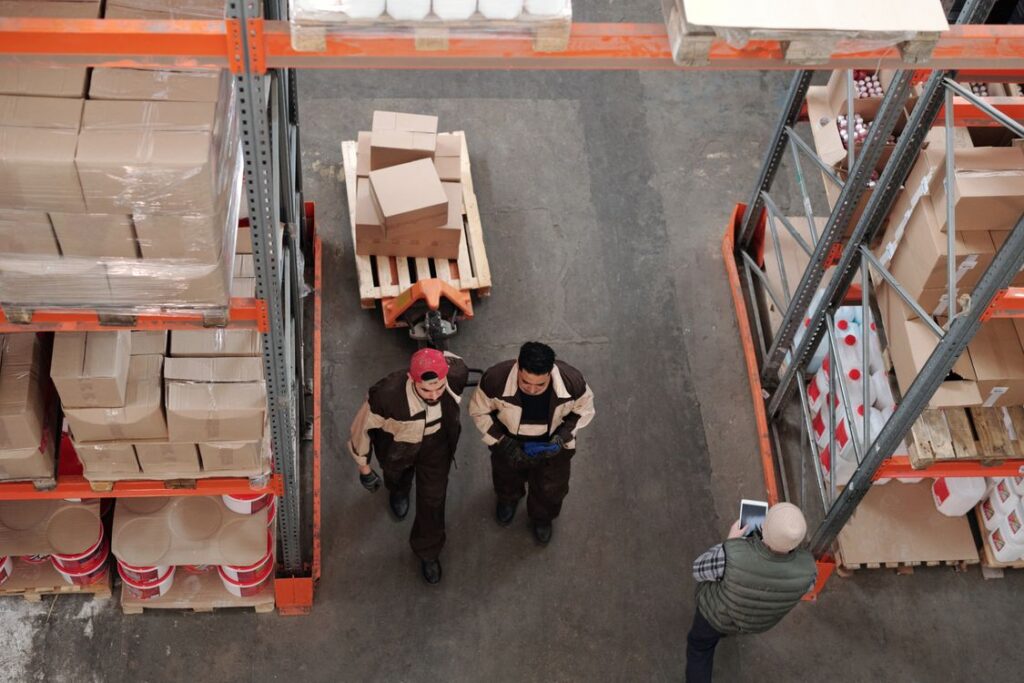
What operators ask before choosing a dropshipping agent

Build a supply chain you can actually see.
Start with one product, one quote, or one fulfillment problem.
Choose a dropshipping agent
Compare work scope, evidence, inventory responsibility, and recovery ownership before choosing a partner.
Agent vs supplier vs 3PL
Separate who makes the product, who coordinates the China-side path, and who fulfills destination stock.
Understand agent pricing
See which product, fulfillment, shipping, inventory, and post-sale assumptions shape a usable quote.
Build a supply chain you can actually see.
Start with one product, one quote, or one fulfillment problem.
Need help with your store? Find the guide for your question, or learn the complete dropshipping workflow.